
THE BEGINNINGS:
My rihla fi talab al-ʿilm (educational journey) started in Lebanon at the American University of Beirut. After three years "wandering" in the wilderness (that is, majoring in Mathematics, B.S. 1990), I "saw the light" and joined the History Department to study the history of the Middle East (B.A. 1991; M.A. 1996). I read medieval, pre-modern and modern Middle Eastern history with the late Kamal Salibi, Islamic culture, historiography and religious thought with Tarif Khalidi, social and intellectual history, and the discipline of History with Samir Seikaly, Ottoman history and history of pre-modern Lebanon with Abdulrahim Abu-Husayn, and medieval Islamic legal and social history with Basim Musallam. In 1996, I came to the United States to work on the Ph.D. at Yale University, where I studied the basic curriculum in Arabic and Islamic Studies: Islamic philosophy and intellectual history with Dimitri Gutas; Arabic philology and poetry with Beatrice Gruendler; Qurʾanic exegesis (tafsir) and Islamic mysticism with Gerhard Bowering, and Islamic law with Ann E. Mayer. I also ventured into ancient Christianity and early Christian monasticism with Bentley Layton, audited diaspora Christianity with Wayne Meeks, and studied Syriac with Paul-Alain Beaulieu, Syriac historiography and religious texts with Walid Saleh, and Persian with Fereshteh Amanat-Kowssar. My professors and classmates at AUB and Yale were instrumental in my education. I owe a great deal to them for instilling in me the passion for intellectual curiosity and knowledge and helping me become a better scholar and teacher.
The fascinating thing about this educational journey is that it is not over yet. It has continued and benefited from many friends and colleagues whose work I find inspiring and who generously share their comments and advice about my own writing and research; they are too numerous to list here.
RESEARCH:
My research (Publications) is varied and reflects my broad educational formation and intellectual curiosities. As a historian of Islam, I am particularly interested in exploring how Muslims, from the days of the prophet Muhammad until today, have perceived their own past and religious tradition, and appropriated them in ways to engage the challenges of their own respective environments. In other words, what draws me to the study of Islamic history and thought is this dynamism, which unfortunately is little appreciated today by many Muslims and non-Muslims alike, of a vast tradition where Muslims constantly struggled to find meanings and interpretations, and even to reinvent it, in light of physical, intellectual and imagined challenges. Thus, my research interests span the periods from early Islam and its conceptual and ideological formation within the world of Late Antiquity, through the problematic Crusader period, and until today. I have written extensively on the Qurʾan and the history of its interpretation, the radicalization of Jihad ideology in the period of the Crusades and its subsequent impact on mainstream Sunni thought and the course of Middle Eastern history, the complex nature of Islamic law and the manipulative impulses of Muslim jurists, early Arabic/Islamic historical writing, Jesus and Mary, Jerusalem and its Fadaʾil (religious merits) literatures, and many other topics. I am also interested in the question of how Muslims have addressed and wrestled with the challenges of the ideas of the Enlightenment and Modernity and reformed their societies and restricted the Shariʿa legal system to a small realm. My objective from examining this wide array of topics is to determine the level of originality on the part of Muslim scholars (past and present) in shaping what we call "Islam", and how this has led to the formation of trends and beliefs that reflect, in the first place, the intellectual, social, political and religious environments of these scholars and movements, and, subsequently, their particular understanding of Islamic history, law and beliefs and the way they have to be conceptualized and transmitted for later generations.
AWARDS:
My research has benefitted over the years from major awards: a fellowship from the National Endowment for the Humanities (2007-2008), a residential fellowship from the Institut d'Études Avancées de Nantes (Nantes IAS), France (2012-2013), an experienced researcher fellowship from the Alexander von Humboldt Foundation, Germany (2013-2014), and a fellowship from the Gerda Henkel Foundation, Germany (2019-2020). I also received awards and grants from the American Philosophical Society, the Mellon Foundation, the Kahn Institute at Smith College, the Sams Fund at Smith College, the Beinecke Rare Book and Manuscript Library at Yale University, as well as other scholarships and grants from the American University of Beirut, Yale University, Middlebury College, and Smith College. I was also elected in 2018 (until 2021) as associate member at the Nantes IAS, where I spent several weeks every year for research and writing.
PROFESSIONAL WORK
I am a co-editor - with Paul M. Cobb (University of Pennsylvania) and Konrad Hirschler (Freie Universität Berlin) of the book-series The Muslim World in the Age of the Crusades (published by Brill), and serve as well on the editorial board of The History of Christian-Muslim Relations book series (published by Brill). Past affiliations include visiting professorships at the École Pratique des Hautes Études in Paris (April-May 2021), and the Department of Religion at Amherst College (Fall 2015), research fellowships at the Institut für Islamwissenschaft (Institute for Islamic Studies) at the Freie Universität Berlin (2013–2014), the History Department at the American University of Beirut (1999–2000), and the Royal Institute for Inter-Faith Studies, Jordan (1995–1999). I was also Associate Researcher at the Institut du Pluralisme Religieux et de l’Athéisme (France), and advisor for the Science and Islam Videos Portal Project (Hampshire College).
I have also been involved as historical advisor and consultant for, and appeared on several films and documentaries, such as Jerusalem: City of Faith and Fury (CNN, premiered 18 July 2021), The Sultan and the Saint (PBS, premiered 26 December 2017), Jésus et l'islam / Jesus and Islam (ARTE TV, premiered 8-10 December 2015), Juifs et musulmans - si loin, si proches / Jews and Muslims: So Far, So Close (ARTE TV, premiered 22 October 2013), and Jerusalem: Center of the World (PBS, premiered 1 April 2009). Besides, I have been active in scholarly circles and societies, as Advisory Board member of the Bavarian Research Center for Interreligious Discourses (Germany, 2021-present), as Director of the Institut d'Études Avancées de Nantes (2020-2021), as Executive Board member of the American Oriental Society (2013–2015), and as president (2010–2012) and vice-president (2008–2010) of Middle East Medievalists, among others.
CURRENT RESEARCH PROJECT:
The major current research project that I am conducting studies the discourses of violence and nonviolence in Islam. The modern discussion of whether Islam promotes or prohibits violence is steeped in political and religious controversy, and has been shaping the public discussion of Islam in all its aspects. There is no point denying that Muslims who commit acts of religious and political violence find legitimacy and empowerment in a wide array of religious and historical texts and in the historical Muslim practice. There is also a tradition, which has existed throughout Islamic history, of nonviolence displayed in a rich legacy of religious, legal and ideological diversity and tolerance among Muslims and between Muslims and non-Muslims. The two traditions have been seen as opposites and as reflecting different worldviews. My project avoids this binary compartmentalization of the issue: Islam is violent or Islam is nonviolent, this form of Islam is nonviolent and that form of Islam is violent, etc. Instead, the focus of this research project is to examine violence and nonviolence in Islam as reflective of unresolved struggles within and between the foundational texts (e.g., the Qurʾan, the Hadith of Muhammad, etc.) and the historical and legal traditions and practices. The objective is to understand the nature and rationale of this struggle, and the way it has impacted Muslims’ understanding and practice of violence and nonviolence.
The project on violence and nonviolnce in Islam has several phases and themes. In the first phase, the focus is on two themes: the unresolved tension about violence and nonviolence in the Qurʾan, and the debate in the Islamic legal, philosophical and theological traditions about war, its rationale, conduct and objectives. Two studies are forthcoming: "The Concept of Just War in Islam," which will appear in The Concept of Just War in Judaism, Christianity and Islam (De Gruyter, 2021); and "War and Peace in the Medieval Islamic World, 622–1453" which will appear in The Cambridge History of International Law, Vol. 8-Part 1 (to be published in 2022).
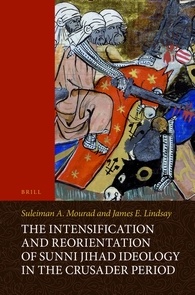
This project came out of a book that I co-authored with James E. Lindsay (Colorado State University), entitled The Intensification and Reorientation of Sunni Jihad Ideology in the Crusader Period: Ibn ʿAsakir (d. 1105–1176) of Damascus and His Age (Brill, 2013, paperback edition 2015). The book examines the radicalization of the ideology of jihad in mainstream Sunni thought during the Crusader period. The main focus was on the career and views of the famous medieval Damascene Hadith scholar and historian Ibn ʿAsakir (d. 571/1176) and his contribution to the jihad campaign of his political patron sultan Nur al-Din, as well as the impact of this radicalized jihad on later scholars and the course of Middle Eastern history. The book maps how Ibn ʿAsakir (re)defined the concept of Jihad as a religious obligation that takes its precepts exclusively from the Hadith of Muhammad. In this respect, the monograph underscores the social and political contexts of Ibn ʿAsakir and his jihad manual The Forty Hadiths for Inciting Jihad as an example of the way certain intellectual and religious positions are generated by particular political environments and moods, and they draw on the authoritative religious sources, especially the Hadith or teachings of Muhammad, to endorse them and make them normative within Sunnism. It also helps us understand the textual canon that modern jihadists deploy to legitimize their violence.
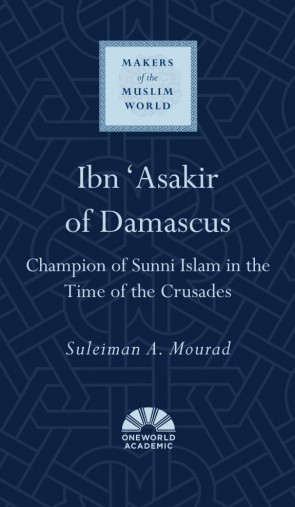
Ibn ʿAsakir was a significant scholar of Hadith in medieval Damascus. He was a major force behind the Sunnification of greater Syria and by extension Egypt, at a time when Sunnis were a minority in both places. I examine his life, career, contribution, and writings, as well as his medieval and modern legacies in my recent book Ibn ʿAsakir of Damascus: Champion of Sunni Islam in the Time of the Crusades (Oneworld, 2021).
PUBLICATIONS
On Arabic-Islamic Historiography
My work on early Arabic-Islamic historical writing came as a fruition of my M.A. dissertation research with Tarif Khalidi, at the American University of Beirut. The particular case I examined was the Futuh al-Sham (Conquests of Syria) by Abu Ismaʿil al-Azdi al-Basri (d. ca. 190/805). The dissertation (out of which came the article published in the Journal of the American Oriental Society) establishes that the text dates to the eighth century CE, and that it was based on the now lost work with the same title by the early chronicler Abu Mikhnaf al-Azdi (d. 157/774) who flourished in Kufa, Iraq; before my study, al-Azdi's Futuh al-Sham was largely ignored in modern scholarship on the early Islamic conquests.
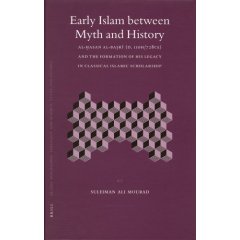
The monograph Early Islam between Myth and History: al-Hasan al-Basri (d. 110 H/728 CE) and the Formation of His Legacy in Classical Islamic Scholarship (Brill 2006), which is based on my dissertation completed under the supervision of Dimitri Gutas at Yale University, examines the way the early Muslim scholar al-Hasan al-Basri has been portrayed in medieval literature and how those portrayals shaped his perception in modern scholarship. I employ textual criticism and historical analysis to demonstrate the pseudepigraphal nature of the treatises attributed to him--more than ten in number that discuss topics like asceticism, mysticism and theology, including the two short epistles al-Risala ila ʿAbd al-Malik ibn Marwan fi al-qadar (Epistle to Caliph ʿAbd al-Malik against the Predestinarians) and Risalat al-Zuhd ila ʿUmar ibn ʿAbd al-ʿAziz (Treatise on Asceticism to Caliph ʿUmar II). I also investigate how, when and why these works, along with several other sayings and anecdotes, came to be attributed to him over the centuries by a variety of religious groups and intellectual trends. I argue, with reference to compelling cases, that transfer of authorship, re-attribution and pseudepigraphy were essential tools for the legitimization of trends and beliefs that became popular in the third/ninth century onward; the groups involved (including Sunnis, Shiʿis, Muʿtazilas, and mystics) used such means to project their views and beliefs back to the generation of Islam's founding fathers (Muhammad, his Companions, and their Successors), enabling them, on the one hand, to claim adherence to the “true” teachings of Islam and, on the other hand, to refute the beliefs of their adversaries. In the particular case of al-Hasan al-Basri, the process of his mythicization was much more intense and widespread than modern scholars have expected. My findings corroborate with the results of a number of recent studies on early Islam, necessitating a radical reconsideration of our understanding of the formative period of Islamic religious thought and the way we read and use the classical sources.
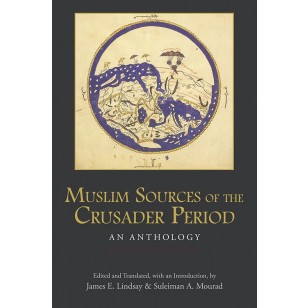
Recently, in a joint project with my colleague James E. Lindsay (Colorado State University), we published Muslim Sources of the Crusader Period (Hackett 2021) which is an anthology taken from a wide range of historical sources, including chronicles, biographical dictionaries, autobiographies, poetry collections, legal manuals, inscriptions, and . It provides eyewitness and contemporary accounts of what unfolded in the eastern Mediterranean and the Near East between the eleventh and fourteenth centuries, thus opening a window onto life in the Islamic Near East during the Crusader period and the interactions between Franks and Muslims in the broader context of Islamic history.
- Arabia and the Birth of Islam: When History, Myth and Opinion Become Inseparable,
- The Shahada and the Creation of an Islamic Identity.
- A Critique of the Scholarly Outlook of the Crusades: The Case for Tolerance and Coexistence.
On Jerusalem
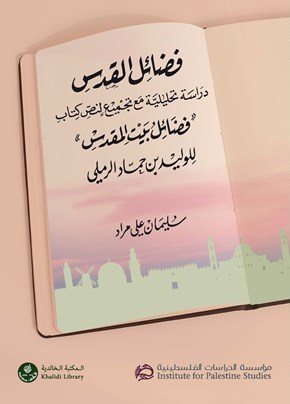
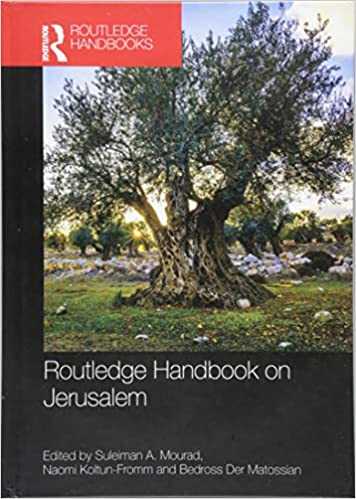
My interest in studying the Muslims' veneration of Jerusalem started while I was a student at the American University of Beirut. Ever since, I have published several books, articles and opeds about the topic, including . I also co-edited two separate multi-disciplinary volumes. The first is Jerusalem: Idea and Reality (with Tamar Mayer), which is a collection of 17 studies on Jerusalem that offer insights into the complexity and significance of the city's significance, representation and status at the historical, religious, social, artistic, and political levels from biblical to modern times. This book, which came out of the conference on Jerusalem that Timi and I organized at Middlebury College in April 2005. More recently, I co-edited (with Naomi Koltun-Fromm and Bedross Der Matossian) the Routledge Handbook on Jerusalem, which came out in 2019. It contains 35 chapters on different themes relating to Jerusalem (religion, history, archaeology, politics, urban planning, art, architecture, etc.). My interest in the significance of Jerusalem in Islam focuses on the period spanning from Muhammad to the end of the Crusades. I am particularly interested in the way Muslims first identified and acknowledged Jerusalem's historical and religious symbolism as stemming from its biblical heritage (in particular the personalities and events associated with the patriarchs and kings of ancient Israel), and how and why this emphasis shifted through times to become primarily dependent on Muhammad's legendary Night Journey and Ascension to Heaven. My most recent publication in this respect is a book that examines the literatures that celebrate the religious significance of Jerusalem in Islam, which includes a critical reconstruction of the earliest text on the religious symbolism of Jerusalem known to have been authored by a Muslim scholar. It is entitled Fadaʾil Bayt al-Maqdis (The Merits of Jerusalem) by al-Walid b. Hammad al-Ramli (d. 300 H/912 CE), who lived in the town of Ramla, west of Jerusalem (the book was published in October 2019 by the Institute of Palestine Studies in Beirut and the Khalidi Library in Jerusalem). I have published as well the following articles:
- Umayyad Jerusalem: From a Religious Capital to a Religious Town.
- Too Big to Be Owned: Reflections on Jerusalem in Islamic History.
- مدينة القدس ومبدأ الوصاية في التاريخ الإسلامي
- Jerusalem in Early Islam: The Making of the Muslims’ Holy City.
On Islamic Law
- Notes sur la Charia et les traditions juridiques islamiques.
- Behold the Jurists! The Indispensable Interpreters of God in Islam.
On the Interpretation (Tafsir) of the Qurʾan
- Why Do We Need Tafsir? The Muʿtazila Perspective.
- The Survival of the Muʿtazila Tradition of Qurʾanic Exegesis in Shiʿi and Sunni tafasir.
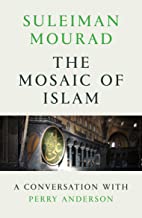
Essays & Books for a Broad Public: In the last few years, I have taken active steps to write to a general audience. An outcome of this is The Mosaic of Islam: A Conversation with Perry Anderson (Verso Books, 2016), which started as a series of conversations with the great historian Perry Anderson while we were both fellows at the Nantes IAS, and which were continued after that. The book takes the form of comments/questions posed by Perry and I address them. It covers the Qurʾan and the Muhammad movement, the spread of Islam and the formation of a rich diversity of beliefs and thought, all the way to modernity and the changes/challenges faced by modern Muslims, including the rise of conservative movements such as Wahhabism, Salafism, and militant Islam. The French edition -- La mosaïque de l'islam: entertien sur le Coran et le djihadisme avec Perry Anderson -- was published in August 2016 by Fayard. The German edition--Das Mosaik des Islam -- was published by Berenberg Verlag in March 2018. The Spanish edition -- El mosaico del islam: una conversación con Perry Anderson -- was published by Siglo XXI (Madrid) in April 2018. A special English edition for South Asia was released by Three Essays Collective in 2017.
I am also a contributing writer of a weekly column in 180° Post (Lebanon) on Islam and political topics, and regularly write in several international online news outlets and print magazines, such as Orient XXI (France), and New Left Review-Sidecar (UK). Some of these essays include:
- في ماهية الاسلام (a series of articles on major themes that help us better understand the complexity of what we call Islam, historically and today.
- فغانستان بين بلاء الجغرافيا.. وبهاء التاريخ (Afghanistan: the Curse of Geography and Brightness of History).- Adonis's Misguided Polemic Against Islam (also in French and Arabic)
- What Inspires Non-Violence and Violence in Islam? Some Religious and Historical Factors.
- Stoff für Hassprediger: Warum es unzulässig ist, die Kreuzzüge heute für Propaganda zu benutzen.
- How the US Creates Terrorism.
- Saladin: The Myth and the Man.
- After the Blast: Lebanon's Durable Sectarianism.
- زيارة إلى القدس: أهميتها الدينية والسياسية في الإسلام
- عن كتابة تاريخ الفترة الصليبية: الحاضر كمؤسس لذاكرة الماضي
- À qui appartient Jérusalem? (also in Persian)
EMPLOYMENT & TEACHING:
My employment at
PERSONAL:
You are most welcome to view my personal & family
profile.
CONTACT INFORMATION:
This is the content for Layout P Taggo
Email: smourad@smith.edu; Office Phone: 413-585-3618